
The short answer
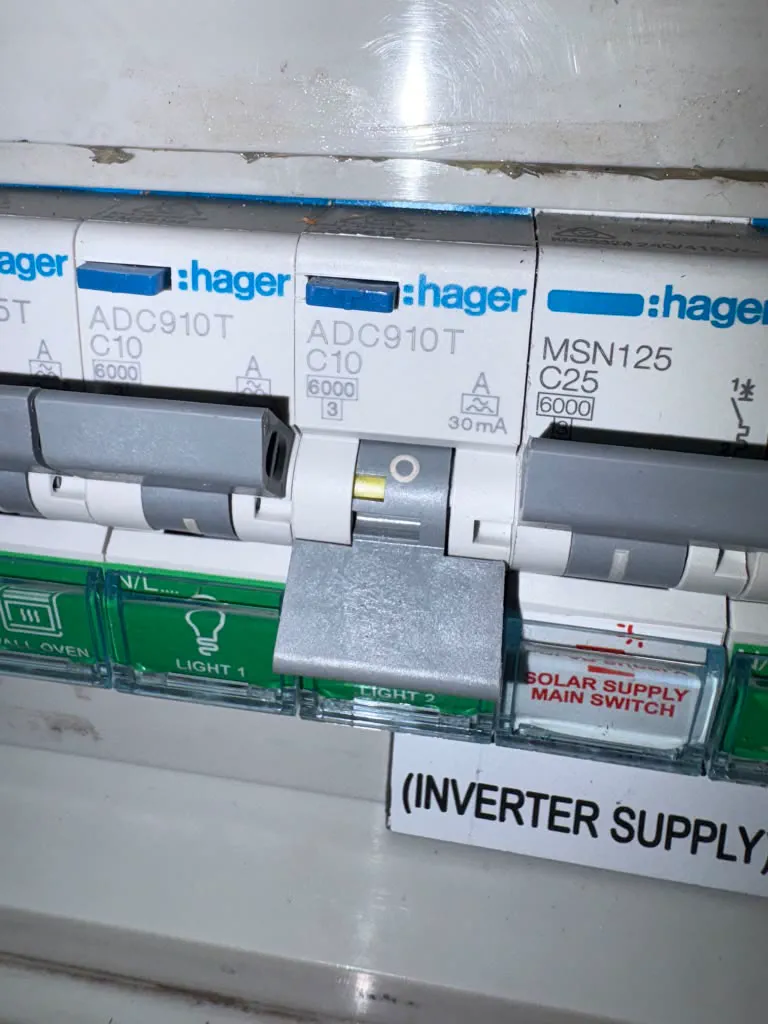
Most of the time, a new switchboard trips more because it is protecting more. Older boards often had one safety switch covering a few power circuits, or none at all, with plain fuses or circuit breakers on everything else. A new board puts safety switch protection on every circuit, so a fault the old board couldn't see now switches the power off.
Energy Safe Victoria's guidance for electricians says that when a switchboard is replaced, clause 2.6.3.2.5 of AS/NZS 3000 requires RCDs on all final sub-circuits. In plain terms, every circuit leaving the board gets a safety switch, not just the power points. Circuits that ran for decades without one are now being watched.
So the new board usually isn't the problem. It's showing you something that was already there.
What a safety switch notices that a fuse doesn't
A fuse or circuit breaker reacts to too much current, such as an overload or a short circuit. A safety switch watches for something different. Energy Safe Victoria says it monitors the flow of electricity through a circuit, detects a problem that may put people at risk and turns the power off within 0.03 of a second.
In practice it trips when current leaks out of the circuit to earth instead of returning the way it should. A small leak through a damp fitting, a worn heating element or a damaged cable can sit unnoticed for years behind a fuse. Behind a safety switch, it shows up as a trip.
Energy Safe Victoria also says safety switches are an extra layer of protection used alongside circuit breakers and fuses, and that they won't prevent every electric shock. That's why a modern board has both kinds of protection working together.
The usual causes after an upgrade
The cause is usually outside the board itself. Appliances with heating elements are frequent offenders: an older oven, kettle, washing machine, dishwasher or hot water element can leak a little current once it is hot or damp. Outdoor fittings come next, where water gets into a garden light, an outdoor power point or a cable joint.
Older wiring can be part of it. Rubber or early plastic insulation that has aged, a joint buried in the ceiling, or a cable damaged during renovation work can leak current without ever blowing a fuse. Several small leaks sharing one safety switch can also add up and trip it, which is one reason per-circuit protection helps.
The timing often points to the cause: trips when it rains, trips when one appliance starts, or trips at the same time each night when a timer or pump switches on.
- Appliances with heating elements, such as ovens, kettles, washing machines, dishwashers and hot water units
- Outdoor lights, sensors and power points that let water in
- Aged or damaged cable, often in older homes or after renovations
- Several small leaks adding up on one shared safety switch
- Equipment on a timer, such as a pump or an off-peak hot water element
What you can safely do
Energy Safe Victoria advises householders who lose power to check whether the safety switch has tripped and reset it, and to call a licensed electrician if it won't reset. Reset it once. If it trips again straight away or won't stay on, leave it off.
You can narrow it down without touching any wiring. Note which switch tripped, what was running and what the weather was doing. If it happens when one appliance is in use, stop using that appliance and unplug it at the power point until it has been checked. Don't open the switchboard, take covers off fittings or swap devices yourself. Energy Safe Victoria says electrical work isn't a DIY job, even small jobs like changing power points or light switches.
Write the pattern down for the electrician. A short note such as 'every wet morning' or 'only when the dishwasher heats' saves a lot of testing time on the day.
How an electrician finds the cause
Fault finding starts at the board. With the tripping circuit identified, the electrician tests the insulation on the cable and then separates the circuit piece by piece, appliance by appliance, until the leak shows itself. An appliance that leaks is flagged for repair or replacement. A damaged cable or wet fitting is repaired, and the circuit is tested again before it goes back into service.
Any electrical installation work done along the way, repairs included, comes with paperwork. Whenever a licensed electrician completes electrical installation work, they must provide a Certificate of Electrical Safety, so the repair is recorded alongside the original upgrade.
Why per-circuit protection makes trips easier to live with
Many new boards use RCBOs, which combine a circuit breaker and a safety switch for each circuit. When one circuit has a fault, only that circuit goes off. You lose the laundry power points, not the kitchen, the fridge and the lights as well, and the tripped device tells you straight away where to look.
Labels matter too. A board labelled by testing each circuit means a trip points to a room, not a guess. If the labels no longer match the rooms after a renovation, ask for them to be checked at the next visit.
Energy Safe Victoria suggests pressing the test button on each safety switch every three months. It should trip and cut power to its circuits. A switch that trips when tested and resets cleanly is working as it should.
Questions that come next
Services that can help
Not sure what you need yet
Answer a few quick questions about your home for a plain answer, what we check before we price the job and what to read next.
All questionnairesGo a little deeper
Our guides, with checklists and questions to bring to the quote.
- How electrical fault finding worksWhat an electrician actually does to trace an electrical fault, from isolating circuits to insulation and continuity tests, and how you can help find it faster.
- RCBOs explained: per-circuit protection or grouped safety switchesWhat an RCBO combines, how one per circuit compares with a few grouped safety switches, and when each switchboard layout makes sense for your home.
- How and when to test your safety switchesHow to run the push-button test at home, what an electrician’s trip-time test measures that the button can’t, and what to do when a switch fails.
- What electrical work you can and can't do yourself in VictoriaWhere Victorian law draws the line on home electrical work, the short list of jobs that are yours, and what to do when a job goes past it.
Quick answers
- How do I describe an electrical fault in my enquiry?Tell us what stopped working, when it started, what was running at the time and what the switchboard shows.
- Why does the kettle or toaster trip the safety switch?Usually the appliance has a fault that lets a little current leak to earth.
- What's the difference between a safety switch and a circuit breaker?A safety switch protects people.
- How do I tell which switch has tripped on my switchboard?Open the switchboard door and look along the rows of switches.
- Why does my oven trip the power when I turn it on?Most often an oven element has failed or taken in moisture, and current is leaking to earth, which trips the safety switch.
We work across Melbourne's west
Family-run and based in Altona Meadows. Pick your suburb for local notes and the jobs we see most there.
- Altona Meadows
- Altona
- Point Cook
- Seabrook
- Laverton
- Laverton North
- Werribee
- Werribee South
- Hoppers Crossing
- Wyndham Vale
- Williamstown
- Newport
- Spotswood
- Yarraville
- Kingsville
- Port Melbourne
- Derrimut
- Deer Park
- Ravenhall
- Maribyrnong
- West Melbourne
- Flemington
- Kensington
- Tullamarine
Sources for this article
6 sources, with the date each was checked
- 1.Energy Safe Victoria: If a switchboard is required to be replaced then as per clause 2.6.3.2.5 (Alterations to installations and replacement of switchboards) of AS/NZS 3000: RCD’s are required on all final sub-circuits. Accessed 30 September 2026.
- 2.Energy Safe Victoria: monitors the flow of electricity through a circuit detects a problem that may pose a risk to personal safety turns the power off within 0.03 of a second always has a test button and '30ma' printed on them. Accessed 30 September 2026.
- 3.Energy Safe Victoria: Locate your electricity box outside your home and check whether the safety switch has tripped. If it has tripped, reset the switch. If the switch won’t reset, call a licensed electrician. Accessed 30 September 2026.
- 4.Energy Safe Victoria: Electrical work isn’t a DIY job, even for small jobs such as changing power points or light switches. Accessed 30 September 2026.
- 5.Energy Safe Victoria: Whenever a licensed electrician completes any electrical installation work, they must provide a Certificate of Electrical Safety (COES). Accessed 30 September 2026.
- 6.Energy Safe Victoria: Follow these steps to check your safety switch every three months: Press in the test buttons on each safety switch which will cut the power and trip the switch into the off position. You may hear a clunking sound. If… Accessed 30 September 2026.
Talk it through with us
Tell us what is happening at your place. Free, no-obligation quotes, and you get the price before we start.
Ask for a quote 03 9116 9050