
The short answer
For most homes you own, a wired video doorbell is the better long-term choice. It draws power all the time, so there is no battery to charge, and it can run motion detection and recording settings that would drain a battery quickly. A battery doorbell makes more sense when you rent, when the front of the house is solid brick or render with no easy cable path, or when you want something you can take with you when you move.
Either way, the doorbell is only as good as the Wi-Fi at your front door. Before choosing, stand at the door with your phone and check the signal. A weak signal causes slow alerts and dropped video whichever power option you pick, and it is easier to fix the network before the doorbell goes up than after.
How a wired doorbell gets its power
Most wired video doorbells run on low voltage from a small transformer. The transformer connects to the house wiring, often near the switchboard or an existing chime, and a thin cable runs from it to the doorbell. Some homes already have doorbell cable from an old chime, which can sometimes be reused if the transformer and cable suit the new doorbell's power needs.
Some video doorbells and intercoms can instead take power and data through a single network cable from a network switch or power injector. That suits homes that already have data cabling to the front of the house, or where cameras are going in at the same time.
The low-voltage cable itself is light work, but connecting a transformer to 240-volt wiring is electrical installation work. Energy Safe Victoria says electrical work isn't a DIY job, even small jobs like changing power points or light switches. When a licensed electrician completes electrical installation work, they must give you a Certificate of Electrical Safety.
Where battery doorbells fit
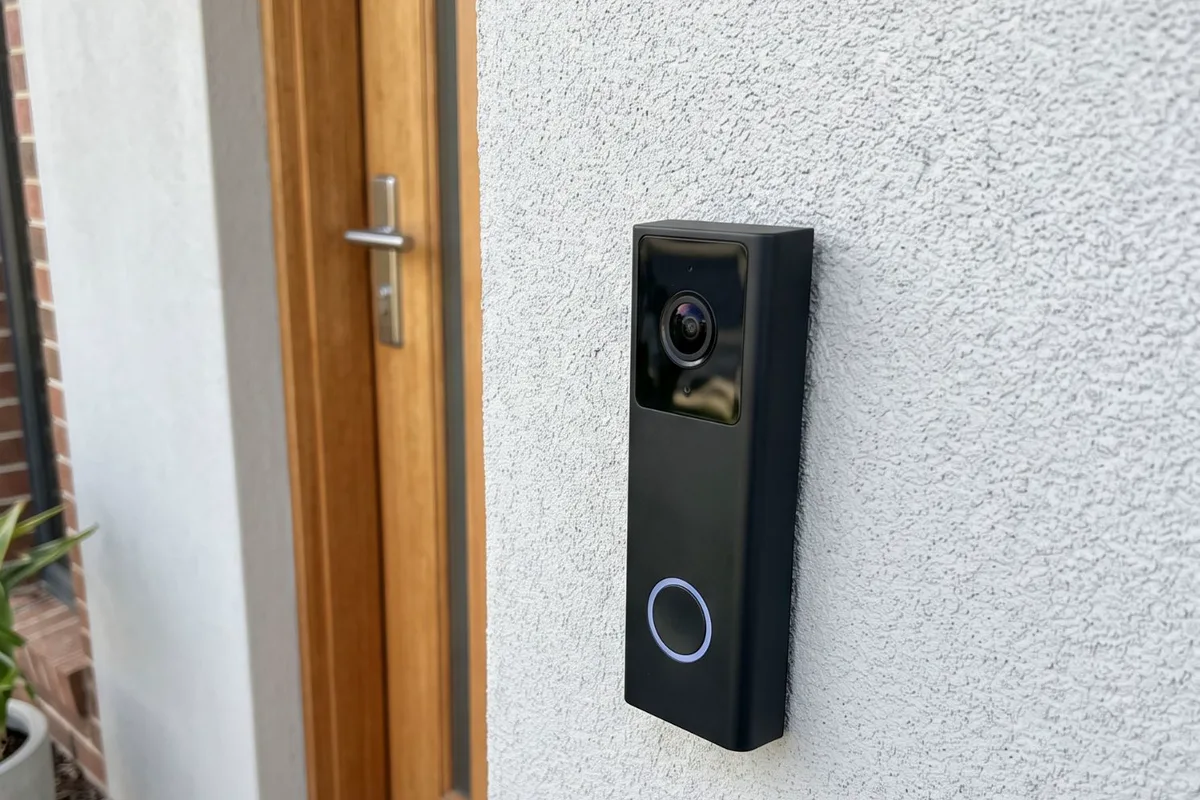
Battery doorbells mount with a few screws and connect to Wi-Fi. There is no cable to run, which makes them a common choice for renters and for doors set in brick, render or stone, where cabling means drilling through masonry. Many come with a chime that plugs into a power point inside.
The trade-off is charging. How long a battery lasts depends on the model, how many people walk past, how sensitive the motion detection is and how cold it gets, because batteries hold less charge on cold mornings. A busy street or long recording settings run them down faster, and many owners end up turning features down to stretch the time between charges.
If you rent, ask the rental provider before screwing anything into the door frame or front wall. A battery doorbell avoids electrical work, but it is still fixed to someone else's property.
The two side by side
Here is how the two usually compare in a typical Melbourne home. The details vary by model, so check the specifications of the one you are considering rather than relying on a general rule.
If you are torn, think about who will look after it. A wired doorbell is set and forget once it is installed. A battery doorbell is easier to put up but needs someone to notice the low-battery warning, take it down and charge it.
- Power: wired is constant; battery needs recharging or a battery swap
- Installation: wired needs a cable path and an electrician for the mains side; battery mounts with screws
- Features: wired models can usually run motion and recording settings that would flatten a battery
- Renting: battery is easier to remove at the end of a lease
- Walls: solid brick, render and stone favour battery or an existing cable path
Planning a wired install
Start with the cable route. In a weatherboard or brick veneer home with an open roof space, a cable can often drop inside the wall beside the door frame. In double brick, or a slab-on-ground home without ceiling access, the route may have to come through the frame, from the meter box or in conduit along the outside wall. The route usually decides how big the job is.
Think about height and angle. Most doorbells sit around chest height beside the door, so the camera sees faces and any parcels left on the step. Check where the sun sits late in the day too. A west-facing door can wash out the picture on summer afternoons, and an angled mounting wedge can help.
If you are adding security cameras, sensor lights or data cabling at the same time, plan them together. One cable plan and one visit is usually tidier than three separate jobs.
Questions that come next
Services that can help
Go a little deeper
Our guides, with checklists and questions to bring to the quote.
- Planning a home security camera system: placement, power and cablingWhere cameras go, how they get power and data, where the recorder lives and what to sort out before walls and ceilings are closed in.
- Planning data cabling for the whole houseChoose a central network spot, decide which rooms get data points, place Wi-Fi access points and feed it from the NBN, as one plan rather than one-off runs.
- Planning security lighting around your homeLight entries, driveways and side paths with sensors, floodlights and camera lights, without glare into the neighbours' windows or dark corners beside the beam.
- Setting up a home office: power, data and lightingPlan a work-from-home room around desk power, a wired data connection, lighting that avoids screen glare, surge protection and comfortable heating or cooling.
Quick answers
- Why does my sensor light stay on or keep turning on all night?A sensor light that stays on or keeps triggering all night is usually seeing something: swaying plants, pets, possums, insects drawn to the light, or warm air from an…
- Why do my lights turn on or off by themselves?Lights that switch on or off by themselves are usually following instructions you've forgotten: a smart switch schedule, a routine in an app, a motion or daylight…
- Why is there water inside my outdoor light?Water gets into outdoor lights through perished seals, cracked lenses, unsealed cable entries or a fitting that isn't rated for where it's mounted.
We work across Melbourne's west
Family-run and based in Altona Meadows. Pick your suburb for local notes and the jobs we see most there.
- Altona Meadows
- Altona
- Point Cook
- Seabrook
- Laverton
- Laverton North
- Werribee
- Werribee South
- Hoppers Crossing
- Wyndham Vale
- Williamstown
- Newport
- Spotswood
- Yarraville
- Kingsville
- Port Melbourne
- Derrimut
- Deer Park
- Ravenhall
- Maribyrnong
- West Melbourne
- Flemington
- Kensington
- Tullamarine
Sources for this article
2 sources, with the date each was checked
- 1.Energy Safe Victoria: Electrical work isn’t a DIY job, even for small jobs such as changing power points or light switches. Accessed 30 September 2026.
- 2.Energy Safe Victoria: Whenever a licensed electrician completes any electrical installation work, they must provide a Certificate of Electrical Safety (COES). Accessed 30 September 2026.
Talk it through with us
Tell us what is happening at your place. Free, no-obligation quotes, and you get the price before we start.
Ask for a quote 03 9116 9050