
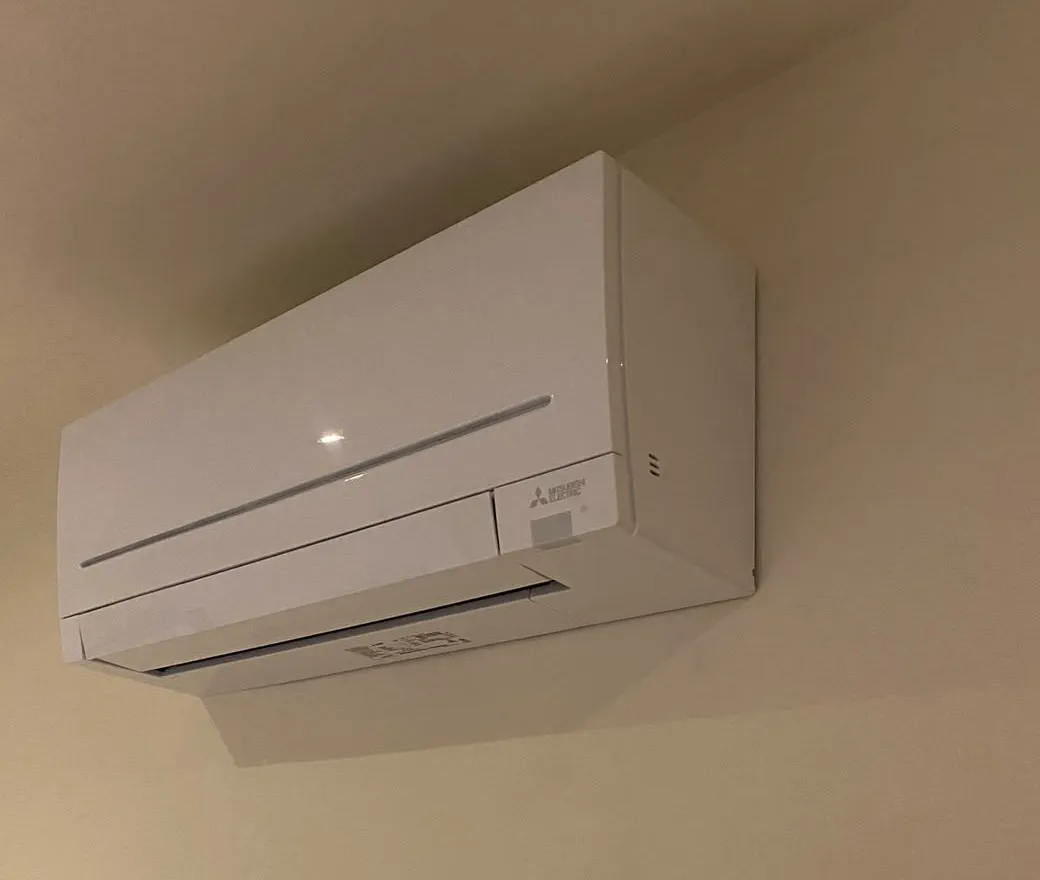
What a fault code is telling you
The simple answer: a fault code is the air conditioner telling you why it stopped or what it's protecting itself from. Write the code down, look it up in the manual, try the few safe checks the manual allows, and if the code comes back, leave the unit off and book a technician with the code, the model and what happened.
Codes vary from one manufacturer to the next, and sometimes between models from the same maker. A split system usually shows a letter and number on the indoor unit's display, or flashes a light a set number of times. Ducted systems show codes on the wall controller. The outdoor unit may also have its own lights on a circuit board, but those sit behind covers and are for the technician to read.
Most codes fall into a few groups: a temperature or pressure sensor reading out of range, a communication fault between the indoor and outdoor units, a protective shutdown from high pressure or overheating, a drain or float switch fault, a fan motor fault, or a problem with the power supply.
Write it down before you reset anything
Resetting the unit often clears the code, and with it the best clue to what went wrong. Before you do anything, take a photo of the display or controller, or count the flashes and note the colour of each light. Note the time, the mode it was in, the weather and what happened just before, such as a storm, a power outage or a very hot afternoon.
Find the model number. It's usually on a label on the side or underneath the indoor unit, on the outdoor unit and in the manual. Only read it if you can see it from the floor or the ground. Don't climb up to an indoor unit or remove a cover to find it.
- The code, or the number and colour of flashes
- A photo of the display or controller
- The model number, if it's safely visible
- When it happened, the mode and the weather
- Anything else that happened: a trip, an outage, a noise or a smell
Look it up, and rule out the normal states
The manual or the manufacturer's website usually has a troubleshooting table that explains each code and says whether it needs a technician. If you've lost the manual, the model number usually finds it online.
Some lights and codes aren't faults. Many units have a filter reminder that lights after a set number of running hours. In heating mode, a unit may stop blowing warm air and show a defrost light while it melts frost off the outdoor coil, then carry on. A timer or standby light can look like a warning too. The manual tells you which is which.
Weather can trigger codes as well. On a hot northerly afternoon, an outdoor unit in a hot, boxed-in spot can cut out on high pressure and show a protection code. If it restarts once the afternoon cools and never does it again, note it for the next service. If it happens every hot day, it needs a look.
The checks you can safely make
Start with the simple things. Replace the remote's batteries, check the mode is heat or cool rather than fan or dry, and clear any timers, sleep settings or app schedules. Clean the washable dust filters if your manual shows how and you can reach them safely. Dirty filters cut airflow and efficiency, which can lead to protective shutdowns and ice on the coil.
Look at the outdoor unit from where you stand. Is the front clear of leaves, bins or anything blocking the airflow? Don't open it, hose it or poke anything into it.
Many manuals suggest a power reset for some codes. Turn the unit off at the remote or controller first. If the manual says to remove power, use the isolating switch next to the outdoor unit only if its cover is intact and dry, or switch the air conditioner's circuit off at the switchboard if it's labelled and safe to reach. Wait a few minutes, then turn it back on. If a safety switch has tripped, reset it once. If it trips again, leave it off and call a licensed electrician.
What to leave alone
Don't take covers off the indoor or outdoor unit, and don't touch the wiring, the isolator's insides or the circuit board. Energy Safe Victoria says electrical work isn't a DIY job, even a small one.
Don't try to top up refrigerant, and be wary of anyone who offers to without testing. Under the national scheme, anyone who services or maintains air conditioning needs a refrigerant handling licence, and no-one is allowed to top up a system until it has been fully tested and every identified leak has been repaired.
Don't keep resetting a unit that keeps throwing the same code. Repeated restarts put extra strain on the compressor. If there's a burning smell, scorching or water near electrical parts, switch it off at the switchboard if it's safe to reach and keep clear. If there's smoke or fire, get everyone out of the house first.
When the code keeps coming back
A code that returns after a reset needs diagnosis. The technician reads the code against the service manual, then checks what it points to: sensor readings, pressures, the fan motors, the drain, the wiring between the units and the boards. Often the cause is simple, such as a blocked drain, a failed sensor or a loose connection, but it takes testing to know.
Faults are worth fixing promptly even when the unit still runs. In federal bench tests, common faults in refrigeration and air conditioning equipment caused average energy losses of 14% to 20% in most tests, so a unit limping along with a fault can cost you in running costs as well as comfort.
What to tell the technician
When you book, pass on the code or the flashing pattern, the photo, the model number and roughly how old the system is. Say what happened before the code appeared and whether anything else tripped or stopped. Mention access too: where the outdoor unit is, whether it's behind a locked gate or up on a roof, and whether there's a pet in the yard.
Those details help the technician arrive with the right tools and, sometimes, the right part, which can save a second visit.
Common questions
Services in this guide
Related jobs
Not sure what you need yet
Answer a few quick questions about your home for a plain answer, what we check before we price the job and what to read next.
All questionnairesQuick answers
- Why isn't the fan on my outdoor unit spinning?A still outdoor fan isn't always a fault.
- Why does my air conditioner keep switching on and off?Frequent stopping and starting, called short cycling, usually means the unit reaches its set temperature too quickly or keeps tripping its own protection.
- My air conditioner won't restart after a power outage. What now?Give it a few minutes first.
- Why won't the louvres on my split system move?First check the swing setting on the remote.
- Why does my air conditioner turn off by itself?Most often a setting is doing it: an off timer, sleep mode, an eco or quiet mode, or an app schedule someone else set up.
From the blog
- A renter says the air conditioning has stopped: what should a rental provider do?A supplied cooling appliance that isn't working is an urgent repair in Victoria. What to ask the renter, who to send, and how to plan a replacement around the 2027 standard.
- What affects the cost of an air conditioner repair?Diagnosis time, parts, refrigerant work, access and the system's type and age all shape a repair bill. Here's how they add up, and when replacement is the better spend.
- Why is my split system leaking water inside?Stop the indoor leak becoming a larger problem, record what happened and arrange a diagnosis without dismantling the system.
- Is a broken air conditioner an urgent repair in a Victorian rental?Understand the urgent-repair category, communicate the fault clearly and coordinate access and authorisation for the contractor.
We work across Melbourne's west
Family-run and based in Altona Meadows. Pick your suburb for local notes and the jobs we see most there.
- Altona Meadows
- Altona
- Point Cook
- Seabrook
- Laverton
- Laverton North
- Werribee
- Werribee South
- Hoppers Crossing
- Wyndham Vale
- Williamstown
- Newport
- Spotswood
- Yarraville
- Kingsville
- Port Melbourne
- Derrimut
- Deer Park
- Ravenhall
- Maribyrnong
- West Melbourne
- Flemington
- Kensington
- Tullamarine
Sources for this guide
8 sources, with the date each was checked
- 1.Bureau of Meteorology (article issued 3 August 2026): To the north lies Australia's hot, dry interior, while to the south stretches the cold Southern Ocean. ... Warm northerly winds arrive first, bringing higher temperatures and clear skies. Then, as a cold front moves in… Accessed 30 September 2026.
- 2.Energy Rating (GEMS Regulator / DCCEEW): Dirty filters significantly reduce the amount of airflow and the energy efficiency of the unit. It can also impact the effectiveness of its heating. Cleaning clogged filters, or replacing a worn one, can lower the… Accessed 30 September 2026.
- 3.Access Canberra Electrical Inspections (ACT Government), Electrical Fact Sheet, updated September 2019: Air-conditioning and heat pump systems incorporating a compressor shall be provided with an isolating switch (lockable) in accordance with Clause 2.3.2.2, installed adjacent to but not on the unit, which isolates all… Accessed 30 September 2026.
- 4.Energy Safe Victoria: Locate your electricity box outside your home and check whether the safety switch has tripped. If it has tripped, reset the switch. If the switch won’t reset, call a licensed electrician. Accessed 30 September 2026.
- 5.Energy Safe Victoria: Electrical work isn’t a DIY job, even for small jobs such as changing power points or light switches. Accessed 30 September 2026.
- 6.Australian Refrigeration Council (ARC): A Refrigerant Handling Licence must be held by any person who carries out work in relation to refrigeration and air conditioning (RAC) equipment. Carrying out work in relation to RAC equipment means to do anything with… Accessed 30 September 2026.
- 7.Australian Refrigeration Council (ARC), Fact Sheet 13 (ARC5225, 11/22): ‘Topping-up’ a system before the system has been fully tested and all identified leaks repaired by any individual is illegal. Accessed 30 September 2026.
- 8.energy.gov.au (Australian Government, DCCEEW): The findings indicated that on average there were energy losses between 14% and 20% across most tests. When several faults co-existed, energy use increased substantially, with a high likelihood of system failure if… Accessed 30 September 2026.
Planning advice for homeowners. Installation requirements depend on the property and equipment. Where this guide refers to Victorian safety or rental rules, use the linked official guidance for the current requirements.
Talk it through with us
Tell us what is happening at your place. Free, no-obligation quotes, and you get the price before we start.
Ask for a quote 03 9116 9050