
The short answer
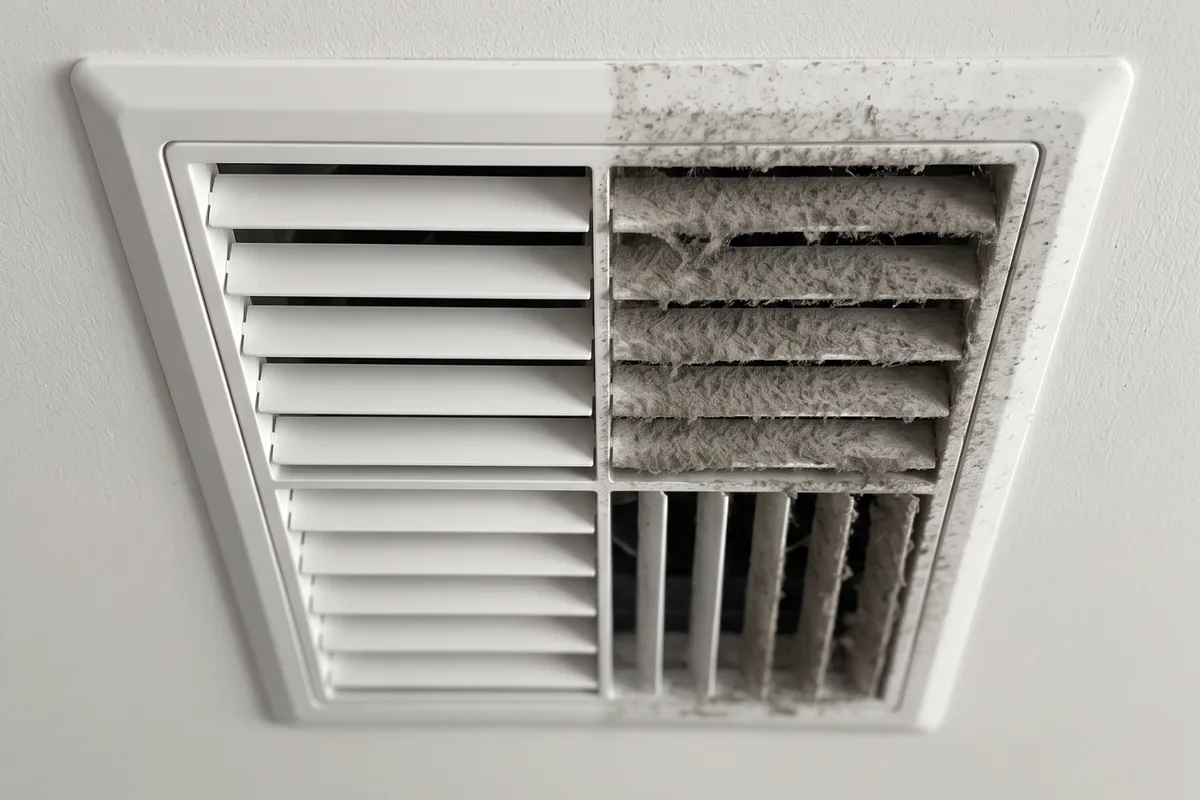
Ducts don't need cleaning on a timetable. In a sealed system with a good filter that is kept clean, most of the dust is caught before it reaches the ducts. Cleaning makes sense when there is a specific reason, such as dust puffing from outlets, a stale or musty smell when the system starts, debris after building work, or signs that rats or mice have been in the roof.
What does need regular attention is the filter and the return air grille. A clogged filter lets dust slip past into the system, starves the unit of air and costs you efficiency. So the first question isn't whether to clean the ducts. It is whether the filter, the return and the unit have been looked after, and whether something has changed.
The filter does most of the work
Every ducted system draws air back through a return grille, usually in a hallway or living area, with a filter behind it or at the unit. That filter is the system's main defence against dust. Energy Rating says dirty filters significantly reduce airflow and efficiency and can affect heating performance, and that cleaning or replacing a clogged or worn filter can lower energy use.
Check the return filter every few months, and more often in a dusty house or one with pets. Switch the system off at the controller first. Washable filters can be vacuumed or washed and left to dry fully; disposable ones are replaced. If the filter doesn't sit snugly in its frame, dust goes around it, so a gap or a bent frame is worth fixing.
Keep the return grille clear of furniture and curtains. Air has to come back to the unit freely for the whole system to work properly.
Signs the ducts themselves need attention
Some signs point past the filter to the ductwork. Dust blowing from outlets soon after the filter was cleaned, a grey stain spreading on the ceiling around an outlet, rattling or whistling that wasn't there before, or one room suddenly getting less air can all mean a duct has split, come loose or been crushed.
Rodents are a common culprit in roof spaces. They chew duct insulation and leave droppings and nesting around the ducts, and a damaged duct then draws roof-space dust into the airflow. Renovation dust is another. Sanding, plastering and demolition with the system running can load the filter and ducts in a single day.
A musty smell usually comes from moisture somewhere in the system, such as a wet drain tray, condensation on poorly insulated ducts or a damp filter. Cleaning without fixing the moisture only buys time.
- Dust from outlets soon after the filter is cleaned
- Dark marks spreading on the ceiling around an outlet
- Droppings, chewed insulation or nesting near ducts in the roof
- A new rattle or whistle, or a drop in airflow to one room
- A musty smell that comes back after the filter is cleaned
Clean, repair or replace
Most flexible ducts are a thin inner liner wrapped in insulation and an outer sleeve. Aggressive cleaning can tear an old liner, so the condition of the duct decides what is sensible. Sound ducts with dust or debris can be cleaned. Torn, crushed or disconnected runs are repaired or replaced.
Insulation matters as much as cleanliness. YourHome advises that ducts should be insulated to at least R1.5, with sealed joints to prevent condensation and leakage. Old ducts with thin, sagging or missing insulation lose heat in winter and can sweat in summer, and they are often better replaced than cleaned.
Replacing a few bad runs is a common middle path. After any duct repair, the outlets should be rebalanced so every room still gets its share of the air.
What a ducted service covers
A ducted service looks at the whole air path: the return grille and filter, the unit's fan and coil, the outlets and the ducts that can be reached in the roof space. On a reverse-cycle system it checks the drain, and on any system it checks the controls and electrical connections and runs each mode.
That visit is the right time to decide about the ducts. If they are sound and reasonably clean, there is nothing to gain from cleaning them. If they are dusty, damaged or poorly insulated, you should get the options and a price before any work goes ahead.
Federal bench tests found that common faults in air conditioning equipment caused average energy losses of 14% to 20% in most tests. A service that catches a clogged filter, a dirty coil or a split duct helps keep the system working the way it should.
Questions that come next
Services that can help
Not sure what you need yet
Answer a few quick questions about your home for a plain answer, what we check before we price the job and what to read next.
All questionnairesGo a little deeper
Our guides, with checklists and questions to bring to the quote.
- Ducts, outlets and return air: how ducted airflow worksHow supply ducts, outlets and return grilles move air through a ducted system, why sizing, insulation and balancing decide comfort and noise, and failure signs.
- Air conditioner filters, dust and allergiesHow filters, return grilles and coils affect dust, smells and hay fever season at home, which filter upgrades help, and where your own cleaning should stop.
- Air conditioner maintenance: what to watch between servicesKeep useful records, follow model-specific filter care and recognise symptoms that need a repair visit.
- Living with air conditioning in a rental: a renter's guideHow to run a rental's split or ducted system well, the simple care that's reasonable for a renter, and what to report to the agent, and how.
Quick answers
- Why is my air conditioner blowing out black specks?Black specks are almost always mould and grime from inside the unit.
- Why do my heating ducts tick or bang when the heater starts?Light ticking, or a single soft pop as the heating starts or stops, is usually metal parts warming and expanding: the heater's plenum, the return air box, duct collars…
- Does my gas ducted heater have a filter I can clean?Many do.
- How do I clean my split system filters?Turn the unit off, lift the front panel, slide the filters out and vacuum off the dust.
- Why has one zone stopped working on my ducted system?When one zone gets no air but the rest work, check the controller first: the zone may be switched off, on a schedule or, with temperature-controlled zones, already at…
We work across Melbourne's west
Family-run and based in Altona Meadows. Pick your suburb for local notes and the jobs we see most there.
- Altona Meadows
- Altona
- Point Cook
- Seabrook
- Laverton
- Laverton North
- Werribee
- Werribee South
- Hoppers Crossing
- Wyndham Vale
- Williamstown
- Newport
- Spotswood
- Yarraville
- Kingsville
- Port Melbourne
- Derrimut
- Deer Park
- Ravenhall
- Maribyrnong
- West Melbourne
- Flemington
- Kensington
- Tullamarine
Sources for this article
3 sources, with the date each was checked
- 1.Energy Rating (GEMS Regulator / DCCEEW): Dirty filters significantly reduce the amount of airflow and the energy efficiency of the unit. It can also impact the effectiveness of its heating. Cleaning clogged filters, or replacing a worn one, can lower the… Accessed 30 September 2026.
- 2.YourHome (Australian Government): Ducts must be well insulated, to at least R1.5, and joints sealed to prevent condensation and leakage. The roof should have reflective foil insulation installed and be vented to dispel hot air. Zoned systems cool only… Accessed 30 September 2026.
- 3.energy.gov.au (Australian Government, DCCEEW): The findings indicated that on average there were energy losses between 14% and 20% across most tests. When several faults co-existed, energy use increased substantially, with a high likelihood of system failure if… Accessed 30 September 2026.
Talk it through with us
Tell us what is happening at your place. Free, no-obligation quotes, and you get the price before we start.
Ask for a quote 03 9116 9050