
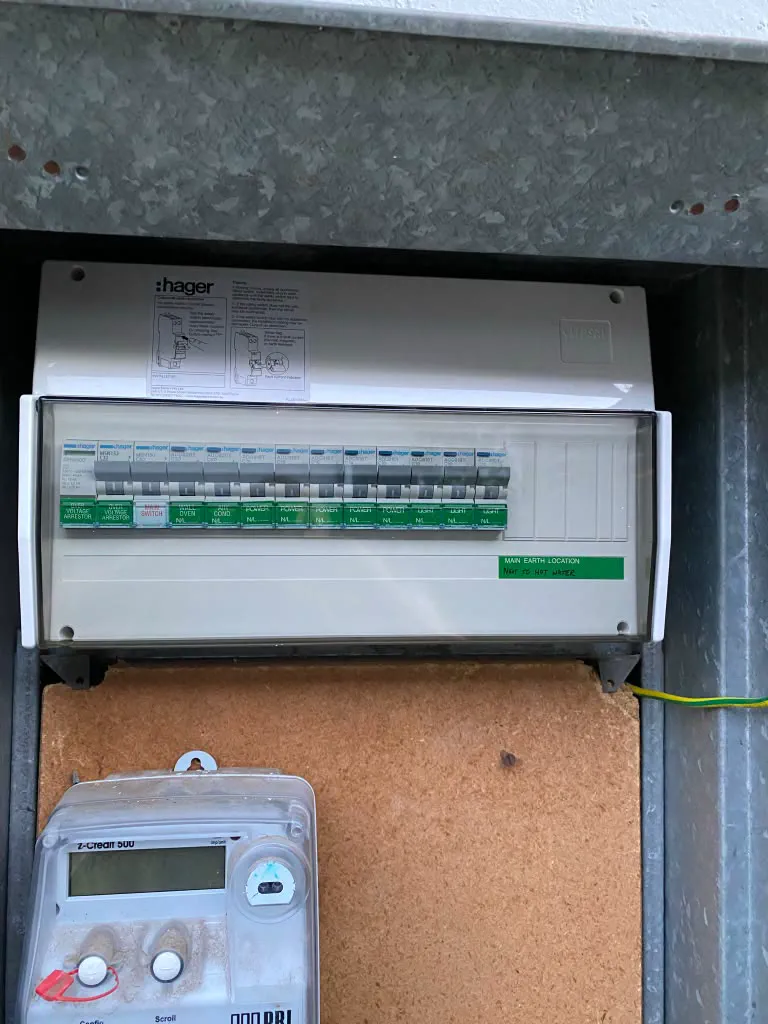
Line the quotes up on scope first
The simple answer: compare quotes on scope, not just the total. Check each one lists the same work, the same equipment and size, what is excluded, who holds which licence and what paperwork you get at the end. Two prices for jobs that only sound the same tell you very little.
Put the quotes side by side and go line by line. Does each one include the same number of points, lights or units? Is the old equipment removed and taken away? Is the switchboard mentioned at all? A quote that looks cheaper often leaves out something the other one includes, such as a new circuit, a safety switch, a longer pipe run or making good around the old unit.
If a line is vague, ask. A good tradesperson can tell you what's in and what's out in plain words, and will put it in writing.
What a clear quote should list
A clear quote describes the job well enough that someone else could price the same thing. For electrical work that means where each point, light or circuit goes, the cable route and whether the switchboard needs work. For heating and cooling it means the make and model, the heating and cooling capacity, where the indoor and outdoor units go, how the pipes and drain run, and the electrical supply.
It should also say what you need to do, such as clearing the roof space access or moving furniture, and what sits outside the job. Plastering, painting, roof patching, gas work by a licensed gasfitter and anything your electricity distributor does are common exclusions. They aren't a problem if they're written down.
- The work described item by item, with locations
- Equipment make, model and capacity
- Cable, pipe and drain routes
- Switchboard, circuit and safety switch work
- Testing, commissioning and the certificate
- Removal and disposal of old equipment
- What you need to do, and what's excluded
- How long the price stands
Check who holds which licence
In Victoria an electrician must work for a Registered Electrical Contractor to do work for a customer, and Energy Safe Victoria says anyone planning electrical installation work must engage a registered electrical contractor, who sends a licensed electrician to do it. The contractor's REC number must appear on any advertisement or statement offering electrical work, so it should be on the quote. Registered contractors must also hold current public liability insurance.
Energy Safe Victoria recommends always asking to see a tradesperson's licence. It shows they're qualified and gives you avenues for recourse if something goes wrong.
Air conditioning has its own licences. Under the national scheme run by the Australian Refrigeration Council, anyone who installs, services or decommissions air conditioning needs a refrigerant handling licence, and installing even a pre-charged split system needs one. In Victoria, refrigerated air conditioning work is also a class of plumbing work regulated by the Building and Plumbing Commission. Gas heater work is for a licensed Type A gasfitter. If one quote covers several trades, ask who does each part.
The paperwork you should get
Whenever a licensed electrician completes electrical installation work, they must provide a Certificate of Electrical Safety. It's a legal document recording the work. For non-prescribed work, such as lights, power points and air conditioning, Energy Safe Victoria says the contractor or electrician must give you a copy within 30 days.
Work on the main switchboard, consumer mains or meter box is prescribed work. Energy Safe Victoria says that if a main switchboard is replaced, the power can't go back on to the new board until a Licensed Electrical Inspector has inspected it. A quote for a switchboard upgrade should allow for that inspection.
A contractor can't refuse to issue a certificate for any reason, including a payment dispute. A quote that says nothing about certificates is worth a question.
Where quotes quietly differ
Switchboard work is the most common gap. Energy Safe Victoria notes the Wiring Rules require additional safety switch protection when an existing installation is altered or a switchboard is replaced. One quote may include that and another may leave it for the day. Ask each one whether your board has room and whether it needs safety switches added.
For air conditioning, check the electrical supply. If the manufacturer's instructions call for a dedicated circuit or safety switch protection, Energy Safe Victoria says those instructions must be followed. Also compare the outdoor unit's mounting, the length of pipe included and where the condensate drain goes.
For ducted systems, ask how the capacity was worked out. The Victorian Government suggests 1.1 to 1.4 kW of heating output for every 10 square metres as a sizing guide, depending on the home, and recommends zones so areas can be run on their own. Duct insulation and sealed joints matter too. A quote based on measuring the house is worth more than one based on the number of bedrooms.
Questions worth asking before you choose
Is the price fixed for the agreed scope, or is it an estimate? What happens if something unexpected turns up once a wall or ceiling is opened? The answer you want is that you'll be shown the problem and given a price before any extra work goes ahead.
Ask how long the power will be off and whether anything needs to be planned around it, such as a home office, a full freezer or medical equipment. Ask how the site will be left: dust sheets, old equipment taken away, holes patched or left for the plasterer.
Finally, ask who will actually do the work and who to call afterwards if something isn't right.
After you choose
Keep the accepted quote, the invoice, the Certificate of Electrical Safety and the equipment manuals together. They help with servicing, any future sale and any question about what was done.
If you're worried a job is unsafe or doesn't meet the rules, Energy Safe Victoria investigates reports about electrical installation work that relate to safety or technical compliance. Billing, quality-of-work and contract disputes are better handled by Consumer Affairs Victoria or VCAT.
Common questions
Services in this guide
Not sure what you need yet
Answer a few quick questions about your home for a plain answer, what we check before we price the job and what to read next.
- Is my switchboard due for an upgrade?A few look-don't-touch questions about your board, its safety switches and what you're planning.
- Which air conditioning suits my home?A few questions about the rooms, what's there now and the type of home, pointing you to the kind of system worth pricing.
Quick answers
- What photos help with an electrical enquiry?Three or four clear photos usually do it: the switchboard with its door open and every cover left in place, a wider shot of where the job is, and any appliance or…
- When will I know the price?Before any work starts.
- Will my fridge and freezer be OK during a switchboard upgrade?Usually, with some planning.
- What is a sub-board, and do I have one?A sub-board is a smaller switchboard fed by its own cable from a circuit breaker on your main switchboard.
- Why does a Licensed Electrical Inspector need to check my new switchboard?Because replacing a main switchboard is prescribed work in Victoria.
From the blog
- What affects the cost of rewiring a house?Testing, storeys, roof and subfloor access, wall types, added points, the switchboard and making good decide what a rewire involves. Here's how to compare quotes.
- Will I need a switchboard upgrade for an EV charger?An empty switchboard slot is only one consideration. Bring your vehicle, charging routine and future appliance plans into the assessment.
- Split system or ducted for an investment property?Splits, multi-heads and ducted compared for rentals on durability, servicing, how renters use them, the 2027 cooling standard and what happens when one fails.
- Should you pre-cool the house before a hot northerly day?On a forecast hot northerly day, start cooling by mid-morning and close up early. Why it beats a late catch-up, and how it differs for evaporative systems.
We work across Melbourne's west
Family-run and based in Altona Meadows. Pick your suburb for local notes and the jobs we see most there.
- Altona Meadows
- Altona
- Point Cook
- Seabrook
- Laverton
- Laverton North
- Werribee
- Werribee South
- Hoppers Crossing
- Wyndham Vale
- Williamstown
- Newport
- Spotswood
- Yarraville
- Kingsville
- Port Melbourne
- Derrimut
- Deer Park
- Ravenhall
- Maribyrnong
- West Melbourne
- Flemington
- Kensington
- Tullamarine
Sources for this guide
13 sources, with the date each was checked
- 1.Energy Safe Victoria: Registered Electrical Contractor (REC) – in Victoria an electrician must work for a Registered Electrical Contractor to perform work for a customer. A Registered Electrical Contractor must be registered with Energy Safe… Accessed 30 September 2026.
- 2.Energy Safe Victoria: If you are planning to have electrical installation work done, you must engage a registered electrical contractor (REC). They will send a licensed and qualified electrician to do the work to the required standards. Accessed 30 September 2026.
- 3.Energy Safe Victoria: An REC must display their REC number on any advertisements, notices or statements which indicate that the REC is conducting, or willing to conduct, electrical contracting work. Accessed 30 September 2026.
- 4.Australian Refrigeration Council (ARC): A Refrigerant Handling Licence must be held by any person who carries out work in relation to refrigeration and air conditioning (RAC) equipment. Carrying out work in relation to RAC equipment means to do anything with… Accessed 30 September 2026.
- 5.Australian Refrigeration Council (ARC): NO. If the refrigerant is contained in equipment, such as a split system air conditioner, a Refrigerant Trading Authorisation is not required. However a refrigerant handling licence is required to install this type of… Accessed 30 September 2026.
- 6.Building and Plumbing Commission (Victorian Building Authority, trading as the Building and Plumbing Commission): Under Part 4 of the Plumbing Regulations 2018, Refrigerated Air-conditioning work is: The construction, installation, replacement, repair, alteration, maintenance, testing or commissioning of refrigerated… Accessed 30 September 2026.
- 7.Energy Safe Victoria: Type A appliances include domestic and light commercial type appliances such cookers, space heaters, central heaters, water heaters, catering equipment and leisure appliances. So, when looking to service and repair your… Accessed 30 September 2026.
- 8.Energy Safe Victoria: The electrician has eight business days after the work is completed to have that work inspected by a licensed electrical inspector (LEI). If an electrician replaces a main switchboard at a property, power cannot go back… Accessed 30 September 2026.
- 9.Energy Safe Victoria: Clause 2.6.3.2.5 of the Wiring Rules states: Additional protection by RCDs shall be provided in existing electrical installations where alterations or a switchboard replacement is completed. Accessed 30 September 2026.
- 10.Energy Safe Victoria: This means that if the manufacturer’s specifications require an air conditioner to be installed on a dedicated circuit or protected by a residual current device then they must be adhered to. Accessed 30 September 2026.
- 11.Department of Energy, Environment and Climate Action (energy.vic.gov.au), page last updated 14/04/25: We recommend providing 1.1 to 1.4kW of heating output for every 10m² of your home covered by a ducted system, depending on the individual characteristics of your home. ... We recommend zones for your ducted system, as… Accessed 30 September 2026.
- 12.YourHome (Australian Government): Ducts must be well insulated, to at least R1.5, and joints sealed to prevent condensation and leakage. The roof should have reflective foil insulation installed and be vented to dispel hot air. Zoned systems cool only… Accessed 30 September 2026.
- 13.Energy Safe Victoria: Energy Safe investigates reports about electrical installation work, electrical and gas appliances, electricity and gas infrastructure issues (and some gas installation matters), which are safety or technical compliance… Accessed 30 September 2026.
Planning advice for homeowners. Installation requirements depend on the property and equipment. Where this guide refers to Victorian safety or rental rules, use the linked official guidance for the current requirements.
Talk it through with us
Tell us what is happening at your place. Free, no-obligation quotes, and you get the price before we start.
Ask for a quote 03 9116 9050